
The global vaping debate has taken another dramatic turn.
While the UK pushes ahead with tougher rules under the newly passed Tobacco and Vapes Act, the United States has surprised many by authorising the first non-tobacco and non-menthol e-cigarette products through the FDA’s PMTA process.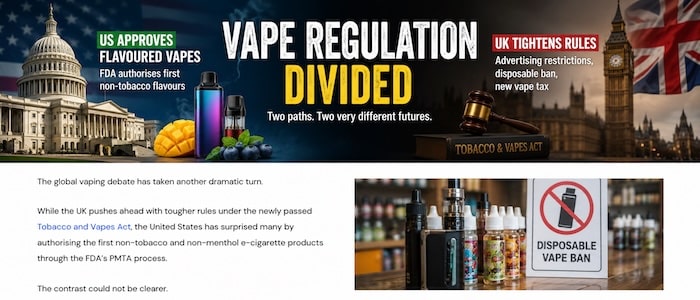
The contrast could not be clearer.
Britain is preparing for tighter advertising rules, product display controls, possible future flavour restrictions and a new vape tax.
America, meanwhile, has just allowed selected flavoured vape pods onto the market after deciding they may benefit adult smokers who want to move away from cigarettes.
For vapers, smokers and the wider industry, the big question is simple: are governments moving toward evidence-based harm reduction, or drifting toward nicotine prohibition?
FDA Authorises Flavoured Vape Products In Major US Policy Shift
The US Food and Drug Administration has authorised four Glas electronic nicotine delivery system products through its premarket tobacco product application pathway.
According to the FDA announcement, the authorised products are Classic Menthol, Fresh Menthol, Gold and Sapphire.
The FDA described this as its first authorisation of non-tobacco and non-menthol ENDS products.
Reporting from AP News and Reuters says the Gold and Sapphire pods are mango and blueberry flavours.
The FDA said the products contain 50mg/ml, or 5%, tobacco-derived nicotine.
That nicotine strength may raise eyebrows in the UK, where nicotine-containing e-liquids sold under standard consumer rules are capped at 20mg/ml.
However, the significance here is not just the nicotine level.
The bigger story is that US regulators have accepted that some flavoured products may offer enough benefit to adult smokers to justify authorisation.
Why The FDA Decision Matters
For years, flavoured vape products in the US faced intense regulatory pressure because of concerns around youth use.
The new Glas authorisations suggest the FDA may be willing to approve flavoured products where companies can demonstrate adult-smoker benefit and credible youth-access controls.
The FDA specifically pointed to access restriction technology and marketing controls as part of the decision.
AP News reported that the Glas system uses digital age-verification features including government ID checks and phone pairing.
That does not mean the FDA has suddenly thrown the doors open to all flavoured vapes.
It does mean regulators have acknowledged something many adult ex-smokers have said for years: flavours can play a serious role in helping people stay away from cigarettes.
The UK Is Moving In The Opposite Direction
While the US has taken a limited step toward allowing some flavoured harm-reduction products, the UK is tightening control.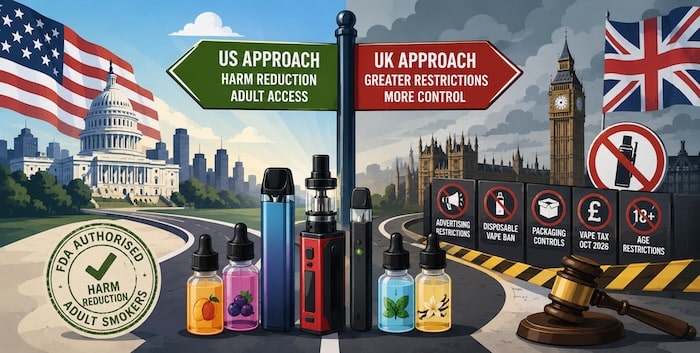
The Tobacco and Vapes Bill received Royal Assent on 29 April 2026, meaning it has now become law.
The legislation is best known for creating a generational tobacco sales ban, making it illegal to sell tobacco to anyone born on or after 1 January 2009.
But for vapers, the Act also matters because it gives ministers wide powers over vape advertising, sponsorship, packaging, branding, displays and product presentation.
The Association of Directors of Public Health London notes that the Act includes measures to ban advertising and sponsorship of vapes and nicotine products, as well as powers to restrict packaging, branding and displays designed to appeal to children.
In other words, even if the UK has not yet introduced a full flavour ban, the legal framework for much tighter control is now in place.
Vape Duty Arrives In October 2026
The next major UK change is the introduction of Vaping Products Duty.
According to HMRC guidance, Vaping Products Duty will apply from 1 October 2026.
The duty applies to vaping liquid produced in, or imported into, the United Kingdom.
HMRC has set the rate at £2.20 per 10ml of vaping liquid.
That means a typical 10ml bottle will carry £2.20 duty before VAT and retail margins are added.
For consumers, that could make some legal vape products noticeably more expensive.
For smokers considering switching, price matters.
If vaping becomes too expensive, the risk is obvious: some smokers may simply stick with cigarettes, while some vapers may look for cheaper illegal products.
The Disposable Vape Ban Has Already Changed The Market
The UK disposable vape ban came into force on 1 June 2025.
The government’s single-use vapes guidance states that it is illegal for businesses to sell, supply, offer to sell, or stock single-use vapes that they plan to sell or supply.
The ban applies to online and in-store sales. It also applies to single-use vapes whether or not they contain nicotine. Reusable and refillable devices remain legal.
The intention was to reduce youth access and environmental waste but as many in the industry warned, banning one category does not automatically remove consumer demand.
If enforcement is weak, illegal disposable products can still find their way into shops, markets and social media sales channels.
The Black Market Problem Is Not Going Away
Every new restriction brings the same challenge: enforcement.
Responsible vape retailers already check age, sell compliant products and follow UK rules.
The real problem is the rogue end of the market.
That includes sellers offering illegal disposables, oversized tanks, unregistered products, fake brands and products with questionable nicotine levels.
HMRC has also published guidance on preparing for Vaping Products Duty and the vaping duty stamps scheme.
From 1 October 2026, manufacturers and importers will face new approval and duty requirements.
Duty stamps are also being introduced to help identify legal products.
That may help enforcement, but only if illegal sellers are actively targeted.
The danger is that compliant retailers are squeezed while bad actors keep operating in the shadows.
Flavours Remain The Heart Of The Debate
The battle over vape flavours is not going away.
Anti-vaping groups argue flavours attract young people.
The Campaign for Tobacco-Free Kids criticised the FDA decision, calling the Glas authorisation a backward step for preventing youth e-cigarette use.
That concern should not be dismissed.
No responsible vape business wants children using nicotine products.
But adult smokers also matter.
Millions of adults do not want tobacco-flavoured e-liquid.
For many ex-smokers, fruit, menthol, dessert and drink flavours are exactly what helped them break the association with cigarettes.
A regulation system that protects children while preserving adult access is difficult, but it is not impossible.
The FDA’s decision suggests one possible model: allow products where adult benefit is demonstrated and youth-access controls are credible.
Final Thoughts
The latest FDA decision does not mean flavoured vapes have won the global argument.
Nor does the UK’s new law mean vaping is being banned.
But the direction of travel is becoming clearer.
The US has just shown that regulators can approve flavoured products when adult-smoker benefit and youth safeguards are taken seriously.
The UK, meanwhile, is entering a much tougher phase of vape regulation and taxation.
The danger is that Britain forgets what made its harm-reduction approach successful in the first place.
Smoking remains the real killer.
Vaping should be regulated properly, sold responsibly and kept away from children.
But it should not be made so expensive, restricted or bland that adult smokers are pushed back toward cigarettes.
That would not be public health progress.
That would be a step backwards.