
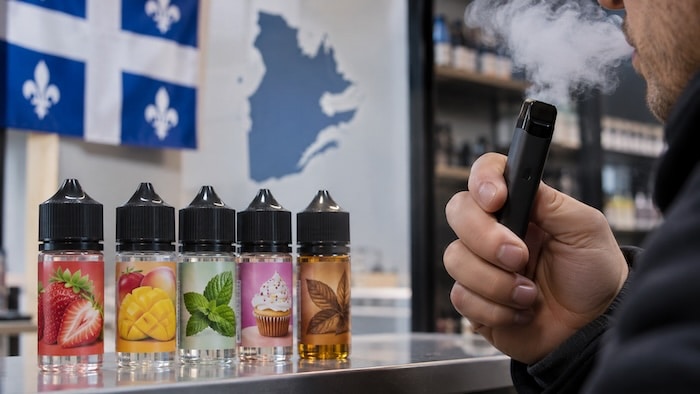
Quebec banned flavored vapes back in 2023. Three years later, government figures show that 77% of vapers are still using flavors covered by the ban.
So much for making them disappear…
 There’s something rather telling about Quebec’s latest vaping statistics.
Back in October 2023, the Canadian province decided that flavored vapes had to go. Fruit flavors, desserts, menthol, the lot. Tobacco flavor and unflavored products could stay, but everything else was shown the door.
The idea was to make vaping less attractive to young people.
Fair enough, you might think. Nobody wants youngsters getting hooked on nicotine.
But fast forward three years and the latest government figures suggest that Quebec’s vapers haven’t exactly embraced their new tobacco-flavored existence.
Far from it.
According to the Institut de la statistique du Québec, approximately 77% of people who vape are still predominantly using flavors that have been banned from sale since 2023.
Not exactly the result you’d expect after three years of prohibition, is it?
Quebec’s Flavour Ban – What Do the Figures Show?
The figures were published in October 2026, following a government survey conducted between February and July involving 17,369 people aged 15 and over.
Among respondents who had vaped during the previous 30 days, 63% said they most frequently used fruit flavors, 10% preferred mint or menthol and 4.4% used candy or dessert flavors.
Meanwhile, around 11% mainly used tobacco flavors and another 11% used unflavored liquids.
So despite the restrictions, fruit flavors remain overwhelmingly popular.
What Flavours Are Quebec Vapers Still Using?
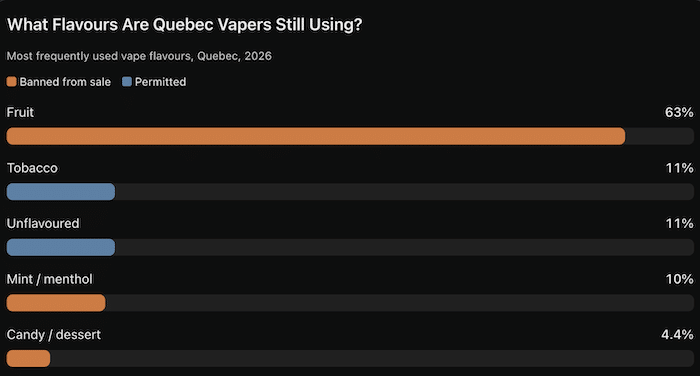
The Quebec Coalition for Tobacco Control highlighted the 77% figure in an October 30 statement marking the third anniversary of the flavor ban.
And here’s the interesting bit.
The Coalition isn’t calling for the ban to be scrapped. It wants the government to clamp down harder on those finding ways around it.
More enforcement, tighter rules and fewer loopholes.
But surely there’s another question worth asking before reaching for yet more legislation.
If the vast majority of vapers are still using these flavors after three years, has the ban actually tackled demand at all?
The Illegal Vape Market – Who’s Really Benefiting?
Of course, the official figures don’t tell us where people are getting their flavored e-liquids.
Some may be obtaining them through unregulated sellers, while others could be using separately purchased flavor additives or products sourced outside the province.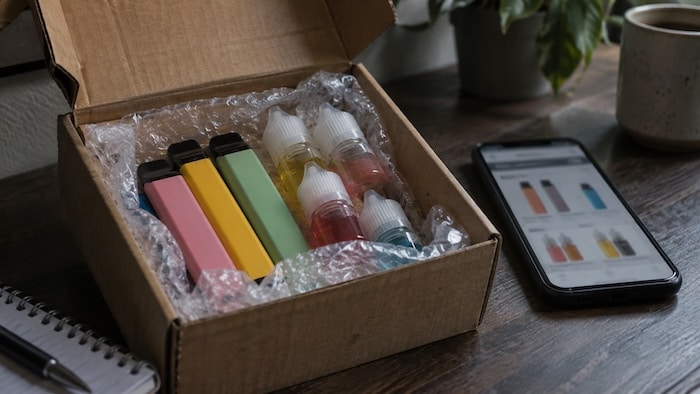
But there’s evidence that prohibited products remain widely available.
In July 2025, Imperial Tobacco Canada published the findings of a Léger survey involving 500 adult vapers in Quebec.
It found that 76% claimed to have purchased at least one illegally sold vaping product during the previous 12 months.
That’s up from 68% in a comparable survey conducted in autumn 2024.
Now, before anyone accuses us of blindly swallowing tobacco industry research, Imperial Tobacco commissioned the survey and obviously has a commercial interest in the outcome.
That matters.
But the findings are still worth considering, particularly when Quebec’s own tobacco-control campaigners are complaining about sellers circumventing the rules.
Indeed, the Coalition has previously documented concerns about online sales and the delivery of prohibited vaping products into Quebec.
So while the two sides might disagree on the solution, they appear to agree on one thing.
The restrictions are being circumvented.
And that creates a rather uncomfortable situation.
Responsible vape stores face restrictions on what they can legally sell, while businesses willing to bend or ignore those rules can potentially continue supplying the flavors consumers actually want.
Brilliant, eh?
Has the Ban Reduced Youth Vaping?
Now this is where things get particularly interesting.
After all, protecting young people was the principal justification for introducing the flavor restrictions.
So has it worked?
An independent study published in the Canadian Journal of Public Health in April 2026 examined precisely that question.
Researchers analysed data from 4,540 adolescents attending 68 schools in Quebec, using a further 1,491 adolescents in Ontario as a comparison group.
They examined six measures, including vaping initiation, daily use, reduced use and quitting.
And the result?
The researchers found no statistically significant differences attributable to Quebec’s flavor ban across any of the six outcomes examined.
That’s hardly a ringing endorsement.
However, it’s important to point out that the research only examined the short-term impact, using data collected through 2024.
The authors themselves called for longer-term research and improvements to how interventions are designed and implemented.
In other words, it would be wrong to claim the study proves flavor bans can never work.
But equally, there’s no justification for declaring this one a success based on those findings.
What Happens When You Remove the Legal Alternatives?
There’s another issue that often seems to get lost whenever politicians start discussing vape bans.
Adult smokers.
Not everyone who enjoys a strawberry or mango vape is a teenager looking for their first nicotine hit.
Plenty of adults use flavored e-liquids as an alternative to cigarettes.
And those consumers don’t suddenly lose their preferences because a government decides tobacco flavor should be good enough for them.
Quebec’s latest figures demonstrate that rather nicely.
A March 2026 report from the Institut national de santé publique du Québec also examined sales of vaping and tobacco products through convenience stores and petrol stations following the restrictions.
But such retail data cannot tell us the full story about purchases from specialist shops, informal sellers or suppliers operating outside those channels.
Which brings us back to the obvious problem.
Making a product unavailable through legitimate retailers doesn’t necessarily mean people will stop using it.
And when consumers start looking elsewhere, regulators risk losing some of the oversight that a properly controlled legal market provides.
That doesn’t mean every prohibited product is dangerous or that every seller is operating outside the law.
But I’d much rather see products supplied through accountable, age-restricted retailers than an increasingly fragmented market that’s harder to police.
Is More Regulation Really the Answer?
The Quebec Coalition for Tobacco Control believes stronger enforcement is needed to make the restrictions effective.
And to be fair, if the government is going to have laws, there’s a reasonable argument that those laws should be enforced.
But perhaps policymakers should also consider whether the policy itself needs rethinking.
After three years, the latest figures show that banned flavors remain extremely popular.
An industry-commissioned survey suggests purchases of prohibited products are widespread.
And independent research has not demonstrated a statistically significant short-term improvement in youth vaping outcomes attributable to the ban.
None of that proves the restrictions have achieved nothing. Nor does it tell us what the long-term consequences will be.
What it does show is that the issue is considerably more complicated than banning a few flavors and expecting everyone to fall into line.
Final Thoughts
I’ve said it before and I’ll say it again.
Keeping vaping products away from children is absolutely essential. But adults who have switched away from smoking shouldn’t be forgotten in the process.
Quebec’s experience should at least make other governments think carefully before introducing similar restrictions.
Because three years after the province banned flavored vapes, more than three-quarters of its vapers are still predominantly using those very flavors.
And the authorities are still trying to work out how to stop people getting hold of them.
Perhaps it’s time to consider whether sensible regulation, proper age verification and enforcement against irresponsible sellers would work better than trying to ban consumer preferences out of existence.
Just a thought…
What do you reckon?
Are flavor bans protecting youngsters, or simply pushing more business towards sellers willing to ignore the rules?
Let us know in the comments below.