
The UK’s landmark Tobacco and Vapes Act has been hailed as one of the biggest public health reforms in a generation.
But has the government overlooked something rather important?
The millions of adults who still smoke cigarettes.
That’s the concern raised by Professor Caitlin Notley, a tobacco harm reduction researcher at the University of East Anglia, in a newly published editorial examining the legislation.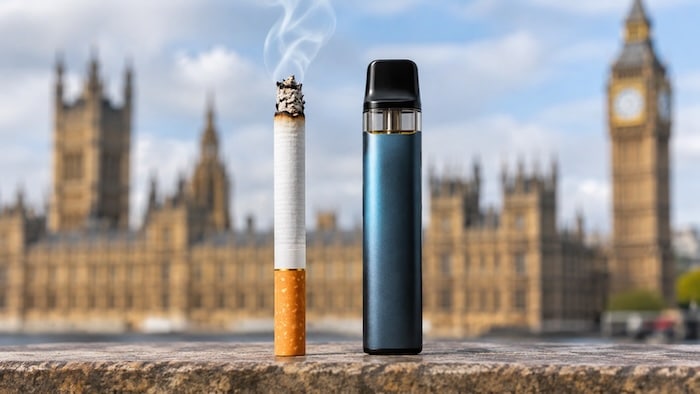
Writing in the scientific journal *Nicotine & Tobacco Research* on November 20, 2026, Notley questions whether the Act strikes the right balance between preventing young people from smoking and helping existing smokers quit.
Her argument raises an uncomfortable question for policymakers.
Could treating vaping and smoking as similar regulatory problems end up confusing the very people most at risk from cigarettes?
A Landmark Law With an Important Mission
The Tobacco and Vapes Act received Royal Assent on April 29, 2026.
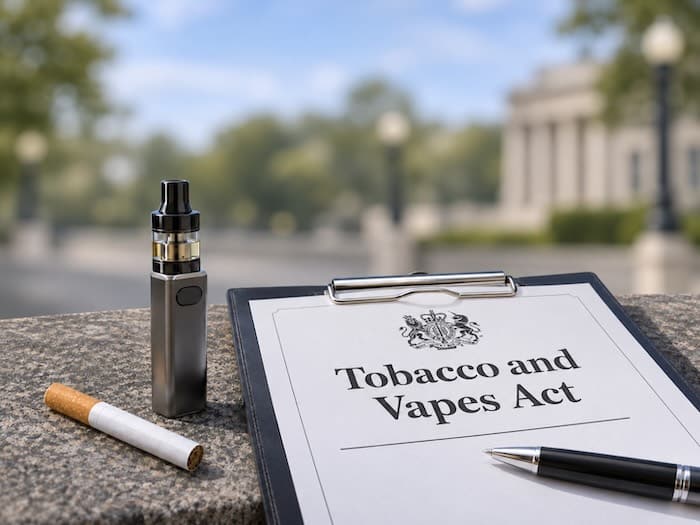 Its headline measure is the creation of a smoke-free generation by making it illegal to sell tobacco to anyone born on or after January 1, 2009.
The intention is straightforward.
Over time, fewer people will be legally able to purchase cigarettes, potentially reducing smoking-related disease and deaths for future generations.
The legislation also introduces measures aimed at protecting children from vaping.
These include restrictions on advertising and sponsorship, along with powers to regulate vape packaging, product displays, and flavors.
The government says the measures will reduce the appeal of nicotine products to children while maintaining access to vaping as a smoking cessation tool for adults.
It’s an ambition few would disagree with.
But according to Notley, the way the legislation treats vaping alongside combustible tobacco could undermine that second objective.
Are Smoking and Vaping Being Treated as Equally Harmful?
One of the concerns raised in Notley’s editorial is the message that tougher vaping regulations could send to the public.
While neither smoking nor vaping is risk-free, the two products have very different risk profiles.
Cigarettes burn tobacco, producing smoke containing thousands of chemicals, including many known carcinogens.
Vapes heat a liquid to produce an aerosol without burning tobacco.
That doesn’t make vaping harmless. Nicotine can cause dependence, and questions remain about the long-term effects of inhaling vaping aerosols.
However, vaping generally exposes users to fewer harmful chemicals than cigarette smoking.
Notley argues that placing strict controls on vaping alongside tobacco restrictions may reinforce the mistaken perception that the products carry equivalent risks.
And if smokers believe vaping is just as dangerous as cigarettes, why would they consider switching?
That is the central issue.
The Evidence for Vaping as a Stop-Smoking Tool
There is substantial scientific evidence that nicotine vaping products can help adults stop smoking.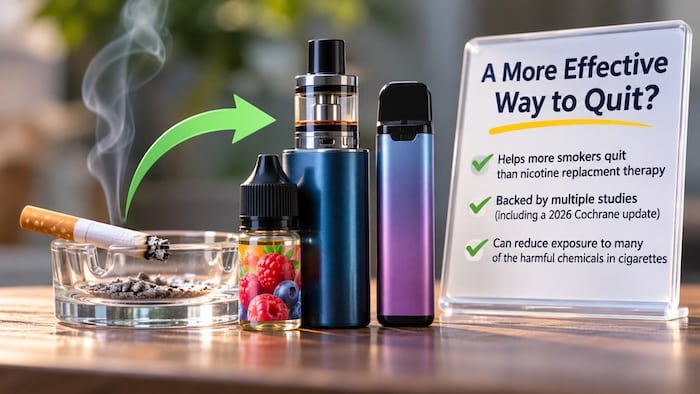
An updated Cochrane review published in August 2026 examined evidence from 80 studies involving almost 30,000 participants.
Researchers concluded that nicotine e-cigarettes can be more effective for smoking cessation than conventional nicotine replacement therapies, such as patches and gum.
Their findings suggested that, for every 100 people using nicotine e-cigarettes to quit smoking, approximately eight to ten might successfully stop smoking for at least six months.
That compares with around six people using nicotine replacement therapy.
These findings don’t mean vaping works for everyone, nor do they eliminate concerns about nicotine dependence or long-term safety.
But they demonstrate why researchers consider vaping an important option for existing smokers.
The distinction matters because a policy that discourages nicotine use among young non-smokers may have different consequences for an adult trying to stop smoking cigarettes.
Protecting Children Without Discouraging Smokers
Preventing youth vaping remains a legitimate public health priority.
Nicotine addiction among teenagers is a serious concern, and products should never be marketed to children.
The government argues that restrictions on packaging, advertising, and flavors will reduce the attractiveness of vaping to young people.
Critics, however, question whether some measures might also reduce the appeal or accessibility of products used by adults to quit smoking.
Flavor restrictions are one example.
Some adults who switch from cigarettes prefer fruit, menthol, or other non-tobacco flavors.
Restricting those options could potentially affect their experience of switching.
That possibility does not prove restrictions will increase smoking rates. Their real-world effects need careful evaluation.
The challenge is developing regulations that prevent irresponsible marketing and underage access without unnecessarily limiting adult smoking cessation options.
Is the Government Sending Mixed Messages?
There’s another issue worth considering.
The UK government continues to recognize vaping as an effective stop-smoking tool.
Its public health approach includes support for smokers who want to switch away from cigarettes.
Yet the Tobacco and Vapes Act also brings stronger controls over how vaping products can be advertised, displayed, and presented to consumers.
Notley questions whether this combination sends a sufficiently clear message about the relative risks of smoking and vaping.
The concern is not necessarily that every new restriction is unjustified.
Rather, it is that regulation needs to be accompanied by accurate public health communication.
An adult smoker should understand that quitting smoking entirely is the best option, that vaping is not harmless, and that switching completely from cigarettes to vaping can reduce exposure to many of the toxins associated with smoking.
Getting the Balance Right
The Tobacco and Vapes Act represents an ambitious attempt to tackle one of the UK’s largest preventable causes of illness and premature death.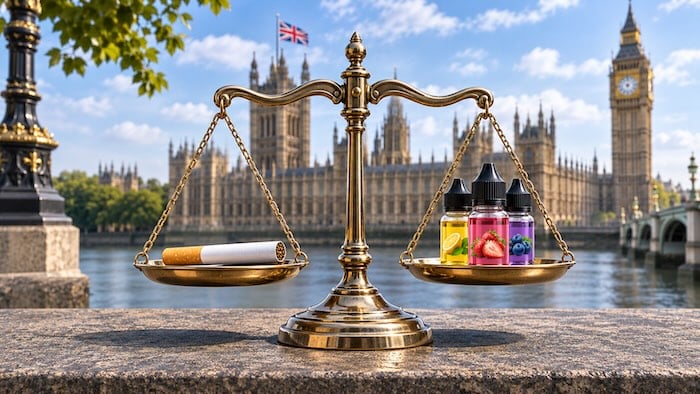
Its generational smoking restrictions could have significant long-term public health benefits.
However, the latest academic criticism highlights why the details of vaping regulation matter.
Protecting children and helping existing smokers are not mutually exclusive goals.
Policymakers need to consider both when developing secondary legislation and communicating the changes to the public.
Notley’s publication is an editorial argument, not a new clinical trial or evidence that the Act has already increased smoking.
Nevertheless, it raises an important question as the UK moves toward implementing further controls.
If the ultimate goal is to reduce smoking-related disease and death, should public health policy make the distinction between cigarettes and vaping clearer, rather than risk blurring it?
Sources
– [Caitlin Notley – Nicotine & Tobacco Research editorial, November 20, 2026](https://doi.org/10.1093/ntr/ntag236)
– [UK Government – Tobacco and Vapes Bill Becomes Law, April 29, 2026](https://www.gov.uk/government/news/tobacco-and-vapes-bill-becomes-law)
– [Cochrane – Updated Evidence on Electronic Cigarettes for Smoking Cessation, August 2026](https://www.cochrane.org/evidence/CD010216_can-electronic-cigarettes-help-people-stop-smoking-and-do-they-have-any-unwanted-effects-when-used)