

Indonesia could be heading for an outright ban on vaping after the country’s most influential Islamic religious body called on the government to outlaw e-cigarettes.
The Indonesian Ulema Council (MUI), which declared vaping haram (forbidden under Islamic law) earlier this month, appeared before the country’s Constitutional Court on November 25 to defend its decision.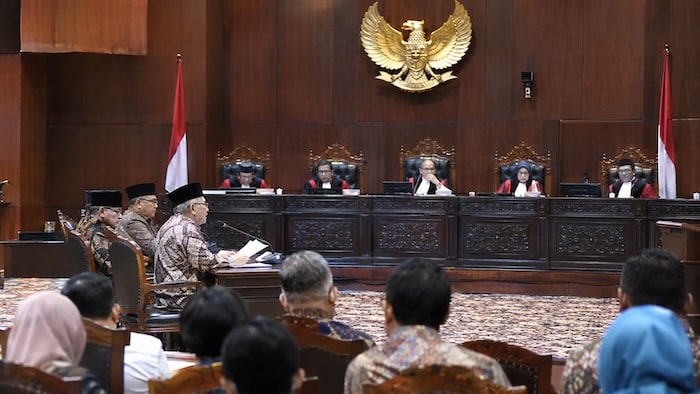
Much of the argument centered on the use of vape devices to consume illegal drugs.
Meanwhile, in a country with one of the world’s largest smoking populations, cigarettes remain freely available.
Sound familiar?
Indonesia Declares Vaping Haram
The MUI issued its religious ruling on November 6, declaring the use, manufacture and sale of e-cigarettes forbidden under Islamic law.
The council cited health concerns, environmental damage and the use of vaping devices to consume narcotics.
It also called on the government to introduce legislation banning e-cigarettes, with penalties for those breaking the law.
The ruling itself does not make vaping illegal in Indonesia. However, given the influence of the MUI, it’s unlikely to go unnoticed by lawmakers.
Illegal Drugs Behind Push for Vape Ban
Speaking at the Constitutional Court hearing on November 25, the MUI raised concerns over the use of e-cigarettes to consume liquid narcotics.
In a statement published on November 26, the council referred to a law enforcement operation that reportedly uncovered eight metric tons of liquid narcotics intended for around four million vape cartridges.
That’s a staggering amount, assuming the figures are accurate.
Nobody would argue against the police cracking down on the manufacture and distribution of illegal drugs. But why should nicotine vapers be caught up in that?
A former smoker buying a bottle of e-liquid from a vape shop has very little to do with the criminal activities described by the MUI.
Banning nicotine e-liquid won’t necessarily stop drug dealers from putting illegal substances into cartridges, either.
Cigarettes Still on Sale
Indonesia’s relationship with tobacco makes this story all the more frustrating.
Smoking is particularly prevalent among Indonesian men, and the country’s tobacco industry is a significant part of its economy.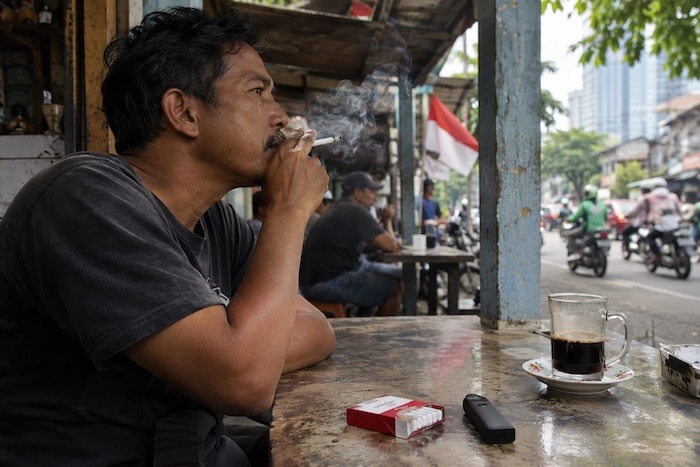
Interestingly, Constitutional Court judge Saldi Isra raised the issue of conventional cigarettes during an earlier hearing on November 17, questioning how the government intended to strengthen restrictions on smoking if e-cigarettes were banned.
I’m glad somebody asked.
The MUI argues that e-cigarettes carry additional risks because of their potential use in drug consumption.
What’s largely missing from that argument, however, is any consideration of the benefits vaping offers smokers.
The evidence that nicotine vaping can help people quit smoking is hardly new. The ongoing Cochrane review of e-cigarettes for smoking cessation has found high-certainty evidence that nicotine vapes are more effective than traditional nicotine replacement therapies in helping people quit.
You’d think a country with as many smokers as Indonesia would have some interest in that research.
Vaping isn’t without risk, but neither is continuing to smoke. And for millions of Indonesian smokers, the latter is precisely what they’re doing.
Another Black Market?
We’ve covered the situation in Australia extensively here at Ecigclick.
Despite years of increasingly restrictive vaping legislation, illegal vapes remain widely available. Criminal gangs have found a lucrative market in supplying products that consumers struggle to obtain legally.
Indonesia risks creating a similar problem.
Those who currently vape won’t all suddenly stop because the government tells them to. Some will undoubtedly quit, but others may seek out illegal suppliers or go back to smoking.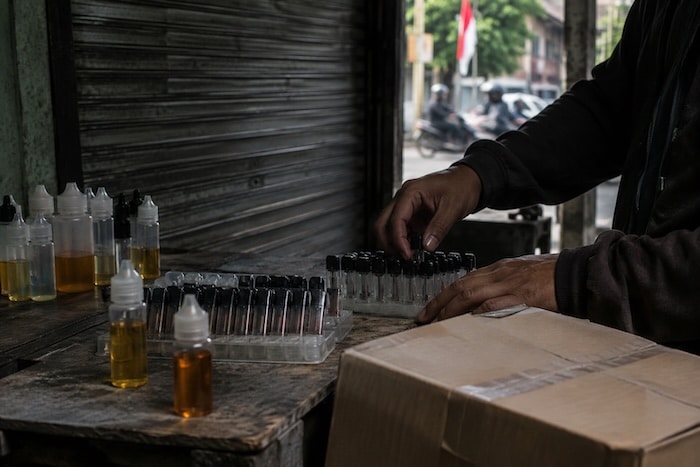
There’s no way of knowing how many would do either at this stage.
Given that one of the MUI’s main concerns is the illicit use of vape products, it seems somewhat counterproductive to consider removing the legitimate market altogether.
At least with a regulated market, authorities have some oversight of what’s being sold and to whom.
Has Indonesia Banned Vaping?
No. As of November 26, 2026, nicotine vaping remains legal in Indonesia.
The next Constitutional Court hearing is scheduled for December 2, according to the [court’s official case tracker], with further evidence expected from government departments and law enforcement agencies.
It will be interesting to see how much attention is given to Indonesia’s smokers during that hearing.
By all means, prosecute those manufacturing and selling illegal drugs. Enforce age restrictions and ensure the products on sale meet appropriate safety standards.
But taking nicotine vapes off the shelves while leaving cigarettes on them? What could possibly go wrong?
I struggle to see the public health logic in that.